
# 143. Reorder List
LeetCode Problem Link (opens new window)
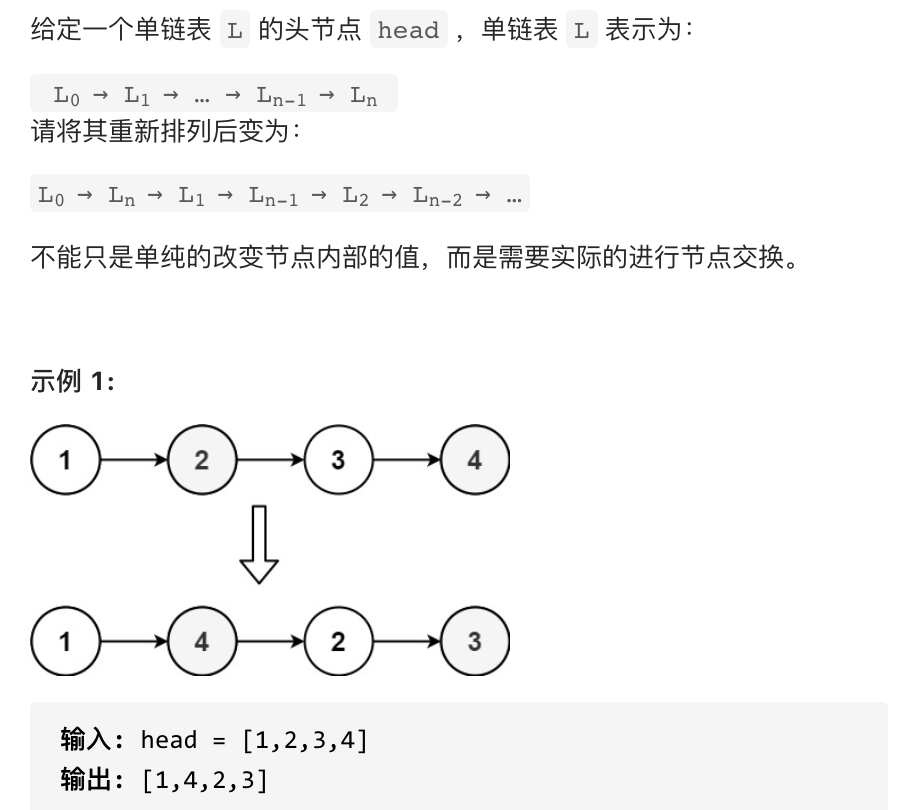
# Approach
In this article, three methods of C++ implementation will be provided:
- Array Simulation
- Deque Simulation
- Direct List Splitting
# Method 1
Put the linked list into an array, then use the two-pointer technique, one from the front and one from the back, to traverse the array and reconstruct the linked list.
The code is as follows:
class Solution {
public:
    void reorderList(ListNode* head) {
        vector<ListNode*> vec;
        ListNode* cur = head;
        if (cur == nullptr) return;
        while(cur != nullptr) {
            vec.push_back(cur);
            cur = cur->next;
        }
        cur = head;
        int i = 1;
        int j = vec.size() - 1;  // i and j are the two pointers from front and back
        int count = 0; // counting, even numbers take from the back, odd numbers take from the front
        while (i <= j) {
            if (count % 2 == 0) {
                cur->next = vec[j];
                j--;
            } else {
                cur->next = vec[i];
                i++;
            }
            cur = cur->next;
            count++;
        }
        cur->next = nullptr; // Note the end
    }
};
2
3
4
5
6
7
8
9
10
11
12
13
14
15
16
17
18
19
20
21
22
23
24
25
26
27
28
# Method 2
Put the linked list into a deque then use the deque to pop elements from the front and the back to reconstruct the new linked list. This method is slightly easier than using an array since it avoids simulating the two-pointer mechanism from front and back.
class Solution {
public:
    void reorderList(ListNode* head) {
        deque<ListNode*> que;
        ListNode* cur = head;
        if (cur == nullptr) return;

        while(cur->next != nullptr) {
            que.push_back(cur->next);
            cur = cur->next;
        }

        cur = head;
        int count = 0; // counting, even numbers take from the back, odd numbers take from the front
        ListNode* node;
        while(que.size()) {
            if (count % 2 == 0) {
                node = que.back();
                que.pop_back();
            } else {
                node = que.front();
                que.pop_front();
            }
            count++;
            cur->next = node;
            cur = cur->next;
        }
        cur->next = nullptr; // Note the end
    }
};
2
3
4
5
6
7
8
9
10
11
12
13
14
15
16
17
18
19
20
21
22
23
24
25
26
27
28
29
30
# Method 3
Split the linked list into two parts, then reverse the second linked list, and finally combine the two linked lists to form a new one.
As shown in the image:
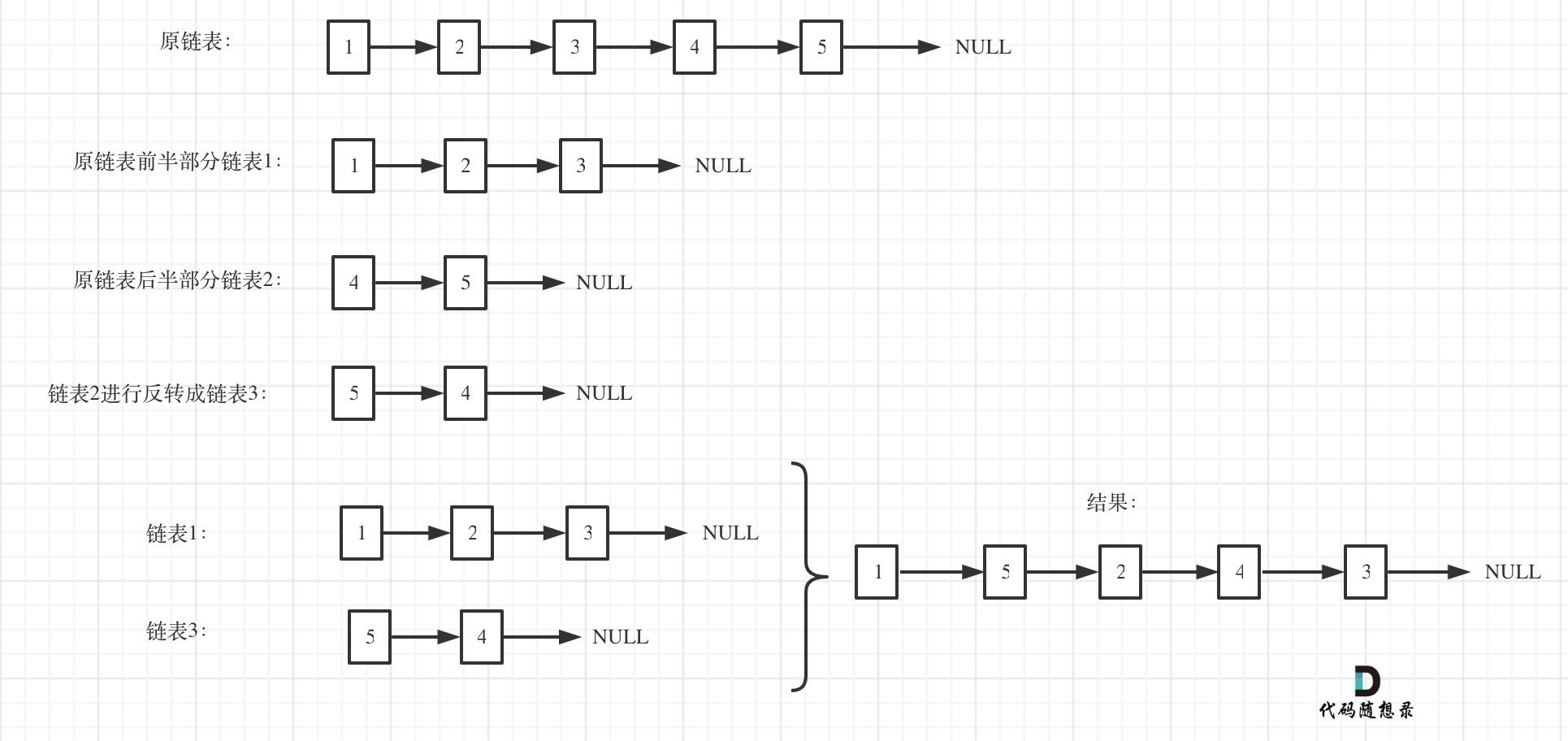
This method is relatively complex. Averaging the linked list into two appears straightforward, but there are many details when writing the code. Furthermore, there are some minor details to consider when finally combining the two linked lists into a new one.
The code is as follows:
class Solution {
private:
    // Reverse linked list
    ListNode* reverseList(ListNode* head) {
        ListNode* temp; // Save the next node of cur
        ListNode* cur = head;
        ListNode* pre = NULL;
        while(cur) {
            temp = cur->next;  // Save cur's next node because we are going to change cur->next
            cur->next = pre; // Reverse operation
            // Update pre and cur pointers
            pre = cur;
            cur = temp;
        }
        return pre;
    }

public:
    void reorderList(ListNode* head) {
        if (head == nullptr) return;
        // Use the fast and slow pointer method to divide the linked list into two parts: head1 and head2
        // If the total length of the list is odd, head1 is relatively one node longer than head2
        ListNode* fast = head;
        ListNode* slow = head;
        while (fast && fast->next && fast->next->next) {
            fast = fast->next->next;
            slow = slow->next;
        }
        ListNode* head1 = head;
        ListNode* head2;
        head2 = slow->next;
        slow->next = nullptr;

        // Reverse head2
        head2 = reverseList(head2);

        // Interleave head1 and head2 to form the new linked list head
        ListNode* cur1 = head1;
        ListNode* cur2 = head2;
        ListNode* cur = head;
        cur1 = cur1->next;
        int count = 0; // even numbers take elements from head2, odd numbers take from head1
        while (cur1 && cur2) {
            if (count % 2 == 0) {
                cur->next = cur2;
                cur2 = cur2->next;
            } else {
                cur->next = cur1;
                cur1 = cur1->next;
            }
            count++;
            cur = cur->next;
        }
        if (cur2 != nullptr) { // Handle the end
            cur->next = cur2;
        }
        if (cur1 != nullptr) {
            cur->next = cur1;
        }
    }
};
2
3
4
5
6
7
8
9
10
11
12
13
14
15
16
17
18
19
20
21
22
23
24
25
26
27
28
29
30
31
32
33
34
35
36
37
38
39
40
41
42
43
44
45
46
47
48
49
50
51
52
53
54
55
56
57
58
59
60
61
# Other Languages Versions
# Java
// Method 1 Java implementation using an array to store nodes
 class Solution {
    public void reorderList(ListNode head) {
        // Two-pointer approach
        ListNode cur = head;
        // ArrayList is based on an array, which allows for random access by index
        List<ListNode> list = new ArrayList<>();
        while (cur != null){
            list.add(cur);
            cur = cur.next;
        }
        cur = head;  // Reset to the head
        int l = 1, r = list.size() - 1;  // Note the left starts from 1
        int count = 0;
        while (l <= r){
            if (count % 2 == 0){
                // Even
                cur.next = list.get(r);
                r--;
            }else {
                // Odd
                cur.next = list.get(l);
                l++;
            }
            // Move the pointer each time
            cur = cur.next;
            count++;
        }
        // Terminate the tail
        cur.next = null;
    }
}
// Method 2: Use a deque, simplifies array operations, the code is cleaner (avoids some boundary conditions)
class Solution {
    public void reorderList(ListNode head) {
        // Solve using the deque approach
        Deque<ListNode> de = new LinkedList<>();
        // Only take elements after the head to avoid duplication
        ListNode cur = head.next;
        while (cur != null){
            de.offer(cur);
            cur = cur.next;
        }
        cur = head;  // Reset to head

        int count = 0;
        while (!de.isEmpty()){
            if (count % 2 == 0){
                // Even, take from the right end of the deque
                cur.next = de.pollLast();
            }else {
                // Odd, take from the left front of the deque
                cur.next = de.poll();
            }
            cur  = cur.next;
            count++;
        }
        cur.next = null;
    }
}

// Method 3
public class ReorderList {
    public void reorderList(ListNode head) {
        ListNode fast = head, slow = head;
        // Find the midpoint
        while (fast.next != null && fast.next.next != null) {
            slow = slow.next;
            fast = fast.next.next;
        }
        // Right is the right half
        ListNode right = slow.next;
        // Disconnect left and right
        slow.next = null;
        // Reverse the right part
        right = reverseList(right);
        // The start of the left
        ListNode left = head;
        // Interleave left and right to form the complete list, the left list is always longer or equal in length to right, so only test right in the loop
        while (right != null) {
            ListNode curLeft = left.next;
            left.next = right;
            left = curLeft;

            ListNode curRight = right.next;
            right.next = left;
            right = curRight;
        }
    }

    public ListNode reverseList(ListNode head) {
        ListNode headNode = new ListNode(0);
        ListNode cur = head;
        ListNode next = null;
        while (cur != null) {
            next = cur.next;
            cur.next = headNode.next;
            headNode.next = cur;
            cur = next;
        }
        return headNode.next;
    }
}
2
3
4
5
6
7
8
9
10
11
12
13
14
15
16
17
18
19
20
21
22
23
24
25
26
27
28
29
30
31
32
33
34
35
36
37
38
39
40
41
42
43
44
45
46
47
48
49
50
51
52
53
54
55
56
57
58
59
60
61
62
63
64
65
66
67
68
69
70
71
72
73
74
75
76
77
78
79
80
81
82
83
84
85
86
87
88
89
90
91
92
93
94
95
96
97
98
99
100
101
102
103
104
# Python
# Method 2 with deque
class Solution:
    def reorderList(self, head: ListNode) -> None:
        """
        Do not return anything, modify head in-place instead.
        """
        d = collections.deque()
        tmp = head
        while tmp.next: # add all but the first element to deque
            d.append(tmp.next)
            tmp = tmp.next
        tmp = head
        while len(d): # interleave by taking reverse and forward
            tmp.next = d.pop()
            tmp = tmp.next
            if len(d):
                tmp.next = d.popleft()
                tmp = tmp.next
        tmp.next = None # end to null

# Method 3 with list reversal
class Solution:
    def reorderList(self, head: ListNode) -> None:
        if head == None or head.next == None:
            return True
        slow, fast = head, head
        while fast and fast.next:
            slow = slow.next
            fast = fast.next.next
        right = slow.next # split the list
        slow.next = None # cut
        right = self.reverseList(right) # reverse the second part
        left = head
        # Alternate from both parts, left is always longer or same length
        while right:
            curLeft = left.next
            left.next = right
            left = curLeft

            curRight = right.next
            right.next = left
            right = curRight


    def reverseList(self, head: ListNode) -> ListNode:
        cur = head
        pre = None
        while(cur!=None):
            temp = cur.next # save next
            cur.next = pre # reverse
            pre = cur
            cur = temp
        return pre
2
3
4
5
6
7
8
9
10
11
12
13
14
15
16
17
18
19
20
21
22
23
24
25
26
27
28
29
30
31
32
33
34
35
36
37
38
39
40
41
42
43
44
45
46
47
48
49
50
51
52
53
# Go
// Method 1 Array Simulation
func reorderList(head *ListNode)  {
    vec := make([]*ListNode, 0)
    cur := head
    if cur == nil {
        return
    }
    for cur != nil {
        vec = append(vec, cur)
        cur = cur.Next
    }
    cur = head
    i := 1
    j := len(vec) - 1  // i, j are the two-pointer
    count := 0   // count, even numbers take from the back, odd numbers take from the front
    for i <= j {
        if count % 2 == 0 {
            cur.Next = vec[j]
            j--
        } else {
            cur.Next = vec[i]
            i++
        }
        cur = cur.Next
        count++
    }
    cur.Next = nil // End
}
2
3
4
5
6
7
8
9
10
11
12
13
14
15
16
17
18
19
20
21
22
23
24
25
26
27
28
// Method 2 Deque Simulation
func reorderList(head *ListNode)  {
    que := make([]*ListNode, 0)
    cur := head
    if cur == nil {
        return
    }

    for cur.Next != nil {
        que = append(que, cur.Next)
        cur = cur.Next
    }

    cur = head
    count := 0
    for len(que) > 0 {
        if count % 2 == 0 {
            cur.Next = que[len(que)-1]
            que = que[:len(que)-1]
        } else {
            cur.Next = que[0]
            que = que[1:]
        }
        count++
        cur = cur.Next
    }
    cur.Next = nil // End
}
2
3
4
5
6
7
8
9
10
11
12
13
14
15
16
17
18
19
20
21
22
23
24
25
26
27
28
// Method 3 Split and Reverse
func reorderList(head *ListNode)  {
    var slow = head
    var fast = head
    for fast != nil && fast.Next != nil {
        slow = slow.Next
        fast = fast.Next.Next
    }
    var right = new(ListNode)
    for slow != nil {
        temp := slow.Next
        slow.Next = right.Next
        right.Next = slow
        slow = temp
    }
    right = right.Next
    h := head
    for right.Next != nil {
        temp := right.Next
        right.Next = h.Next
        h.Next = right
        h = h.Next.Next
        right = temp
    }
}
2
3
4
5
6
7
8
9
10
11
12
13
14
15
16
17
18
19
20
21
22
23
24
25
# JavaScript
// Method 1 Using array to store nodes
var reorderList = function(head, s = [], tmp) {
    let cur = head;
    // list is an array, can use index to access
    const list = [];
    while(cur != null){
        list.push(cur);
        cur = cur.next;
    }
    cur = head; // Reset to head
    let l = 1, r = list.length - 1; // Left starts from 1
    let count = 0;
    while(l <= r){
        if(count % 2 == 0){
            // even
            cur.next = list[r];
            r--;
        } else {
            // odd
            cur.next = list[l];
            l++;
        }
        cur = cur.next;
        count++;
    }
    cur.next = null; // End
}

// Method 2 Using deque in JavaScript (runs slowly)
var reorderList = function(head, s = [], tmp) {
    // JavaScript array used as deque
    const deque = [];
    let cur = head.next;
    while(cur != null){
        deque.push(cur);
        cur = cur.next;
    }
    cur = head;  // Reset to head
    let count = 0;
    while(deque.length !== 0){
        if(count % 2 == 0){
            cur.next = deque.pop();
        } else {
            cur.next = deque.shift();
        }
        cur = cur.next;
        count++;
    }
    cur.next = null;
}

// Method 3 Split, Reverse and Merge
var reorderList = function(head, s = [], tmp) {
    const reverseList = head => {
        let headNode = new ListNode(0);
        let cur = head;
        let next = null;
        while(cur != null){
            next = cur.next;
            cur.next = headNode.next;
            headNode.next = cur;
            cur = next;
        }
        return headNode.next;
    }

    let fast = head, slow = head;
    while(fast.next != null && fast.next.next != null){
        slow = slow.next;
        fast = fast.next.next;
    }
    let right = slow.next;
    slow.next = null;
    right = reverseList(right);
    let left = head;
    while (right != null) {
        let curLeft = left.next;
        left.next = right;
        left = curLeft;

        let curRight = right.next;
        right.next = left;
        right = curRight;
    }
}
2
3
4
5
6
7
8
9
10
11
12
13
14
15
16
17
18
19
20
21
22
23
24
25
26
27
28
29
30
31
32
33
34
35
36
37
38
39
40
41
42
43
44
45
46
47
48
49
50
51
52
53
54
55
56
57
58
59
60
61
62
63
64
65
66
67
68
69
70
71
72
73
74
75
76
77
78
79
80
81
82
83
84
85
# TypeScript
Helper Array Method:
function reorderList(head: ListNode | null): void {
    if (head === null) return;
    const helperArr: ListNode[] = [];
    let curNode: ListNode | null = head;
    while (curNode !== null) {
        helperArr.push(curNode);
        curNode = curNode.next;
    }
    let node: ListNode = head;
    let left: number = 1,
        right: number = helperArr.length - 1;
    let count: number = 0;
    while (left <= right) {
        if (count % 2 === 0) {
            node.next = helperArr[right--];
        } else {
            node.next = helperArr[left++];
        }
        count++;
        node = node.next;
    }
    node.next = null;
};
2
3
4
5
6
7
8
9
10
11
12
13
14
15
16
17
18
19
20
21
22
23
Splitting List Method:
function reorderList(head: ListNode | null): void {
    if (head === null || head.next === null) return;
    let fastNode: ListNode = head,
        slowNode: ListNode = head;
    while (fastNode.next !== null && fastNode.next.next !== null) {
        slowNode = slowNode.next!;
        fastNode = fastNode.next.next;
    }
    let head1: ListNode | null = head;
    // Reverse the second part
    let head2: ListNode | null = reverseList(slowNode.next);
    slowNode.next = null;
    while (head2 !== null) {
        const tempNode1: ListNode | null = head1!.next,
            tempNode2: ListNode | null = head2.next;
        head1!.next = head2;
        head2.next = tempNode1;
        head1 = tempNode1;
        head2 = tempNode2;
    }
};
function reverseList(head: ListNode | null): ListNode | null {
    let curNode: ListNode | null = head,
        preNode: ListNode | null = null;
    while (curNode !== null) {
        const tempNode: ListNode | null = curNode.next;
        curNode.next = preNode;
        preNode = curNode;
        curNode = tempNode;
    }
    return preNode;
}
2
3
4
5
6
7
8
9
10
11
12
13
14
15
16
17
18
19
20
21
22
23
24
25
26
27
28
29
30
31
32
# C
Method 3: Reverse List
//Reverse a linked list
struct ListNode *reverseList(struct ListNode *head) {
    if(!head)
        return NULL;
    struct ListNode *preNode = NULL, *curNode = head;
    while(curNode) {
        //Store curNode->next temporarily (will be updated)
        struct ListNode* tempNode = curNode->next;
        //Point curNode->next to preNode
        curNode->next = preNode;
        //Update preNode to curNode
        preNode = curNode;
        //Update curNode to the next node in original list
        curNode = tempNode;
    }
    return preNode;
}

void reorderList(struct ListNode* head){
    //slow pointer to mid node (last node of the first half), fast pointer as help, jumps two nodes every loop
    struct ListNode *fast = head, *slow = head;
    while(fast && fast->next && fast->next->next) {
        fast = fast->next->next;
        slow = slow->next;
    }
    //Reverse nodes after slow->next
    struct ListNode *sndLst = reverseList(slow->next);
    //Disconnect the two halves
    slow->next = NULL;
    //Start interleaving from curNode->next, curNode initially is head, so fstList should start from head->next
    struct ListNode *fstLst = head->next;
    struct ListNode *curNode = head;

    int count = 0;
    //While nodes present in both lists
    while(sndLst && fstLst) {
        if(count % 2) {
            curNode->next = fstLst;
            fstLst = fstLst->next;
        } else {
            curNode->next = sndList;
            sndLst = sndLst->next;
        }
        curNode = curNode->next;
        ++count;
    }

    //Append remaining nodes if any
    if(fstLst) {
        curNode->next = fstLst;
    }
    if(sndLst) {
        curNode->next = sndLst;
    }
}
2
3
4
5
6
7
8
9
10
11
12
13
14
15
16
17
18
19
20
21
22
23
24
25
26
27
28
29
30
31
32
33
34
35
36
37
38
39
40
41
42
43
44
45
46
47
48
49
50
51
52
53
54
55