
# 19. Remove Nth Node From End of List
LeetCode Problem Link (opens new window)
Given a linked list, remove the n-th node from the end of the list and return its head.
Advanced: Can you try to implement this with a single scan?
Example 1:
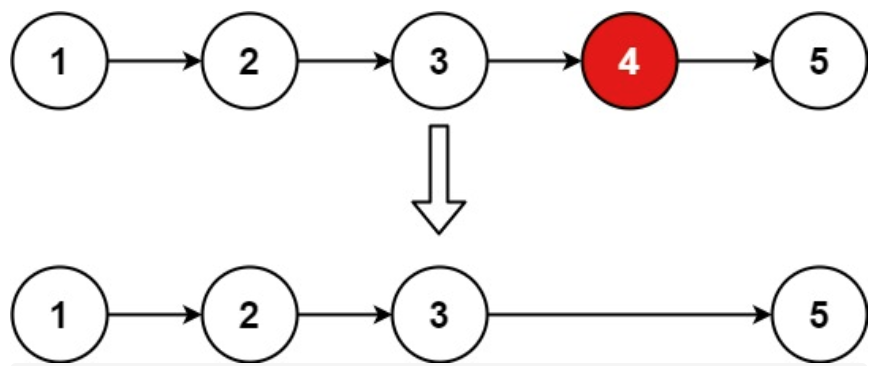
Input: head = [1,2,3,4,5], n = 2
Output: [1,2,3,5]
Example 2:
Input: head = [1], n = 1
Output: []
Example 3:
Input: head = [1,2], n = 1
Output: [1]
# Approach
The classic application of the two-pointer technique. If you want to delete the nth node from the end, let the fast pointer move n steps, and then move both fast and slow pointers at the same time until the fast pointer reaches the end of the list. Then, delete the node pointed to by the slow pointer.
This is the idea, but pay attention to some details.
Follow these steps:
Firstly, I recommend using a dummy head node, which makes the logic of deleting the actual head node easier to handle. If you're unfamiliar with virtual head nodes, check out this article: 0203.Remove Linked List Elements (opens new window)
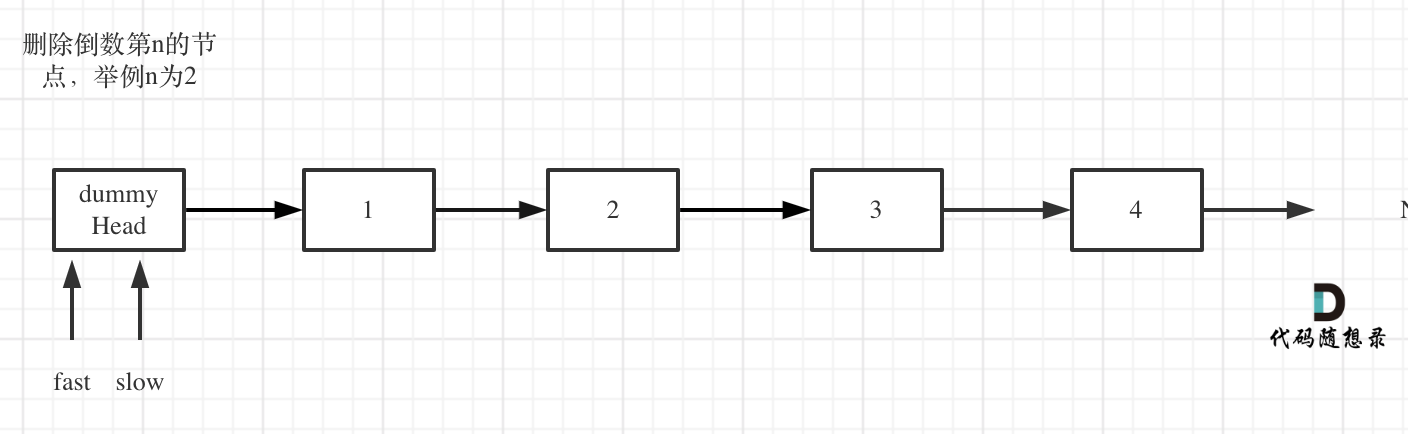
Define fast and slow pointers, both initially set to the dummy head node, as shown in the diagram:
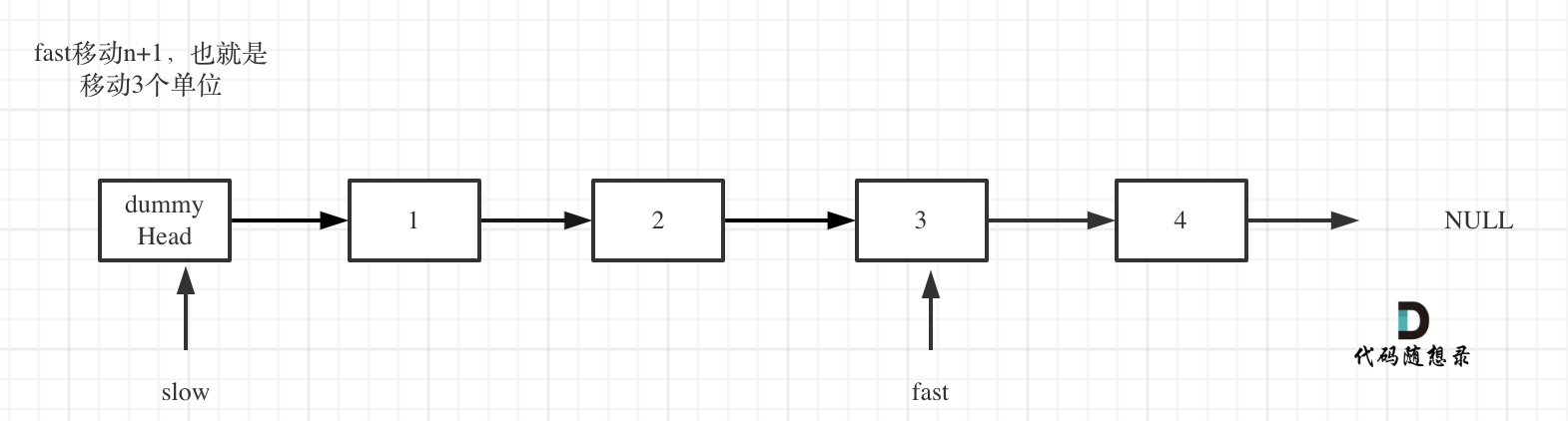
The fast pointer first moves n + 1 steps. Why n + 1? Because only in this way, when moving simultaneously, the slow pointer can point to the node before the one to be deleted (making the delete operation more convenient), as shown in the diagram:
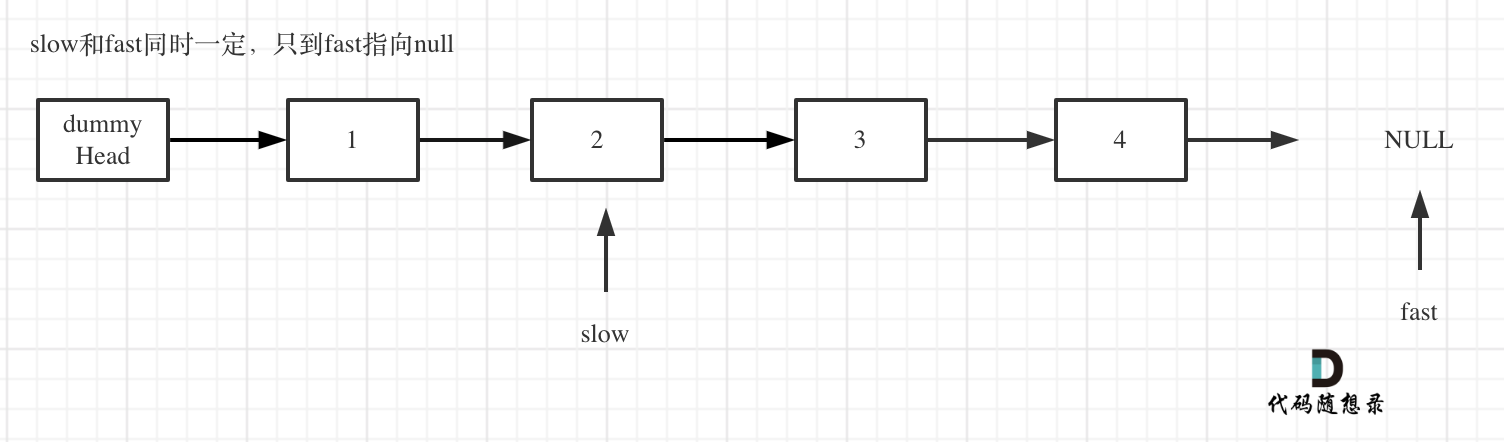
Move fast and slow pointers simultaneously until fast reaches the end, as shown in the picture:
Delete the node pointed to by slow's next, as shown:
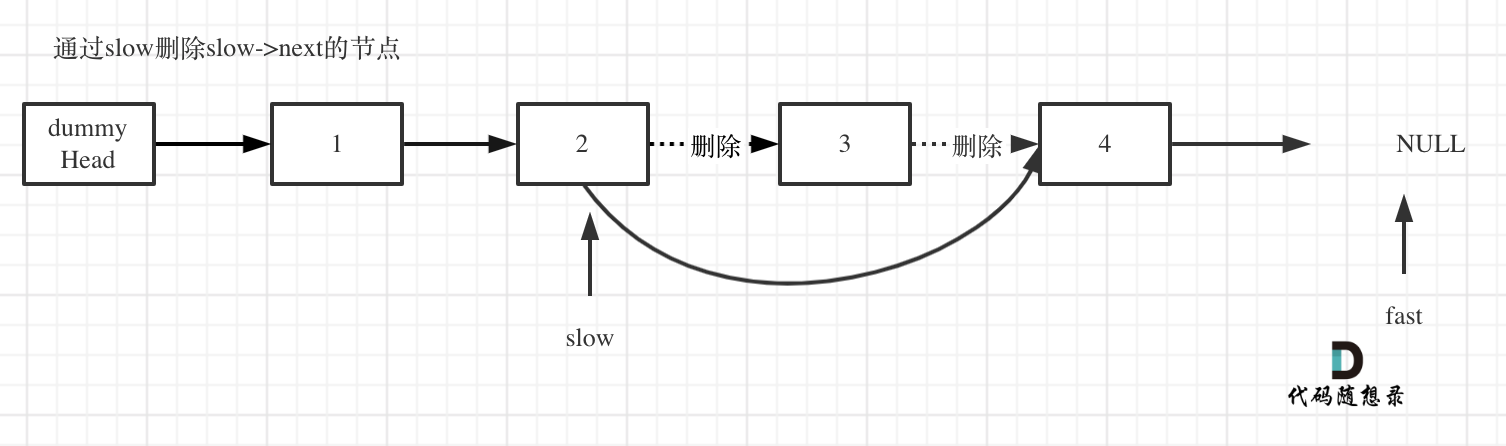
This leads to the following C++ code:
class Solution {
public:
    ListNode* removeNthFromEnd(ListNode* head, int n) {
        ListNode* dummyHead = new ListNode(0);
        dummyHead->next = head;
        ListNode* slow = dummyHead;
        ListNode* fast = dummyHead;
        while(n-- && fast != NULL) {
            fast = fast->next;
        }
        fast = fast->next; // fast moves one more step so that slow points to the node before the one to be deleted
        while (fast != NULL) {
            fast = fast->next;
            slow = slow->next;
        }
        slow->next = slow->next->next;

        // ListNode *tmp = slow->next;  // C++ memory release logic
        // slow->next = tmp->next;
        // delete tmp;

        return dummyHead->next;
    }
};
2
3
4
5
6
7
8
9
10
11
12
13
14
15
16
17
18
19
20
21
22
23
24
- Time Complexity: O(n)
- Space Complexity: O(1)
# Other Language Versions
# Java:
class Solution {
    public ListNode removeNthFromEnd(ListNode head, int n) {
        // Create a new dummy node pointing to head
        ListNode dummyNode = new ListNode(0);
        dummyNode.next = head;
        // Two pointers set to the dummy node
        ListNode fastIndex = dummyNode;
        ListNode slowIndex = dummyNode;

        // The two pointers must be n nodes apart
        for (int i = 0; i <= n; i++) {
            fastIndex = fastIndex.next;
        }
        while (fastIndex != null) {
            fastIndex = fastIndex.next;
            slowIndex = slowIndex.next;
        }

        // Now slowIndex points to the node before the one to be deleted
        // To understand this, visualize a linked list of length 3 and simulate the code
        if (slowIndex.next != null) {
            slowIndex.next = slowIndex.next.next;
        }
        return dummyNode.next;
    }
}
2
3
4
5
6
7
8
9
10
11
12
13
14
15
16
17
18
19
20
21
22
23
24
25
26
class Solution {
    public ListNode removeNthFromEnd(ListNode head, int n) {
        // Create a new dummy node pointing to head
        ListNode s = new ListNode(-1, head);
        // Invoke the remove method recursively starting from the dummy node
        remove(s, n);
        // Return the new list's head (ignoring the dummy node)
        return s.next;
    }

    public int remove(ListNode p, int n) {
        // Base case: if the current node is null, return 0
        if (p == null) {
            return 0;
        }
        // Recurse into the next node
        int net = remove(p.next, n);
        // If the current node is the n-th node from the end, proceed with deletion
        if (net == n) {
            p.next = p.next.next;
        }
        // Return the current node's total depth
        return net + 1;
    }
}
2
3
4
5
6
7
8
9
10
11
12
13
14
15
16
17
18
19
20
21
22
23
24
25
# Python:
# Definition for singly-linked list.
# class ListNode:
#     def __init__(self, val=0, next=None):
#         self.val = val
#         self.next = next

class Solution:
    def removeNthFromEnd(self, head: ListNode, n: int) -> ListNode:
        # Create a dummy node and set its next to the head of the list
        dummy_head = ListNode(0, head)

        # Set up two pointers, slow and fast, both initialized at the dummy node
        slow = fast = dummy_head

        # Fast pointer moves n + 1 steps ahead
        for i in range(n+1):
            fast = fast.next

        # Move both pointers until fast reaches the end of the list
        while fast:
            slow = slow.next
            fast = fast.next

        # Delete the n-th node by updating the (n-1)-th node's next pointer
        slow.next = slow.next.next

        return dummy_head.next
2
3
4
5
6
7
8
9
10
11
12
13
14
15
16
17
18
19
20
21
22
23
24
25
26
27
# Go:
/**
 * Definition for singly-linked list.
 * type ListNode struct {
 *     Val int
 *     Next *ListNode
 * }
 */
func removeNthFromEnd(head *ListNode, n int) *ListNode {
	dummyNode := &ListNode{0, head}
	fast, slow := dummyNode, dummyNode
	for i := 0; i <= n; i++ { // Note the <= here; otherwise, slow would be exactly at the n-th node when fast is nil
		fast = fast.Next
	}
	for fast != nil {
		fast = fast.Next
		slow = slow.Next
	}
	slow.Next = slow.Next.Next
	return dummyNode.Next
}
2
3
4
5
6
7
8
9
10
11
12
13
14
15
16
17
18
19
20
# JavaScript:
/**
 * @param {ListNode} head
 * @param {number} n
 * @return {ListNode}
 */
var removeNthFromEnd = function (head, n) {
  // Create a sentinel node to simplify the logic
  let dummyHead = new ListNode(0, head);
  let fast = dummyHead;
  let slow = dummyHead;
  while (n--) fast = fast.next;
  while (fast.next !== null) {
    slow = slow.next;
    fast = fast.next;
  }
  slow.next = slow.next.next;
  return dummyHead.next;
};
2
3
4
5
6
7
8
9
10
11
12
13
14
15
16
17
18
# TypeScript:
Version 1 (Fast and Slow Pointer Method):
function removeNthFromEnd(head: ListNode | null, n: number): ListNode | null {
    let newHead: ListNode | null = new ListNode(0, head);
    // Based on leetcode’s definition, fast and slow need not be ListNode | null.
    let slowNode: ListNode = newHead;
    let fastNode: ListNode = newHead;

    while(n--) {
        fastNode = fastNode.next!; // fastNode.next cannot be null after moving n nodes from the virtual head.
    }
    while(fastNode.next) {  // Traverse until fastNode.next = null, which means at the end. At this point, slowNode points at the n-th from last.
        fastNode = fastNode.next;
        slowNode = slowNode.next!;
    }
    slowNode.next = slowNode.next!.next; // the n-th from last node's next is definitely not null.
    return newHead.next;
}
2
3
4
5
6
7
8
9
10
11
12
13
14
15
16
Version 2 (Total Node Count Method):
function removeNthFromEnd(head: ListNode | null, n: number): ListNode | null {
    let curNode: ListNode | null = head;
    let listSize: number = 0;
    while (curNode) {
        curNode = curNode.next;
        listSize++;
    }
    if (listSize === n) {
        head = head.next;
    } else {
        curNode = head;
        for (let i = 0; i < listSize - n - 1; i++) {
            curNode = curNode.next;
        }
        curNode.next = curNode.next.next;
    }
    return head;
};
2
3
4
5
6
7
8
9
10
11
12
13
14
15
16
17
18
Version 3 (Reverse Recursion Method):
function removeNthFromEnd(head: ListNode | null, n: number): ListNode | null {
    let newHead: ListNode | null = new ListNode(0, head);
    let cnt = 0;
    function recur(node) {
        if (node === null) return;
        recur(node.next);
        cnt++;
        if (cnt === n + 1) {
            node.next = node.next.next;
        }
    }
    recur(newHead);
    return newHead.next;
};
2
3
4
5
6
7
8
9
10
11
12
13
14
# Kotlin:
fun removeNthFromEnd(head: ListNode?, n: Int): ListNode? {
    val pre = ListNode(0).apply {
        this.next = head
    }
    var fastNode: ListNode? = pre
    var slowNode: ListNode? = pre
    for (i in 0..n) {
        fastNode = fastNode?.next
    }
    while (fastNode != null) {
        slowNode = slowNode?.next
        fastNode = fastNode.next
    }
    slowNode?.next = slowNode?.next?.next
    return pre.next
}
2
3
4
5
6
7
8
9
10
11
12
13
14
15
16
# Swift:
func removeNthFromEnd(_ head: ListNode?, _ n: Int) -> ListNode? {
    if head == nil {
        return nil
    }
    if n == 0 {
        return head
    }
    let dummyHead = ListNode(-1, head)
    var fast: ListNode? = dummyHead
    var slow: ListNode? = dummyHead
    // fast moves n ahead
    for _ in 0 ..< n {
        fast = fast?.next
    }
    while fast?.next != nil {
        fast = fast?.next
        slow = slow?.next
    }
    slow?.next = slow?.next?.next
    return dummyHead.next
}
2
3
4
5
6
7
8
9
10
11
12
13
14
15
16
17
18
19
20
21
# PHP:
function removeNthFromEnd($head, $n) {
    // Set a dummy head node
    $dummyHead = new ListNode();
    $dummyHead->next = $head;

    $slow = $fast = $dummyHead;
    while($n-- && $fast != null){
        $fast = $fast->next;
    }
    // Fast moves one more step, making slow point right before the node to be deleted
    $fast = $fast->next;
    while ($fast != NULL) {
        $fast = $fast->next;
        $slow = $slow->next;
    }
    $slow->next = $slow->next->next;
    return $dummyHead->next;
}
2
3
4
5
6
7
8
9
10
11
12
13
14
15
16
17
18
# Scala:
object Solution {
  def removeNthFromEnd(head: ListNode, n: Int): ListNode = {
    val dummy = new ListNode(-1, head) // Define a dummy head node
    var fast = head // Fast pointer starts at the head
    var slow = dummy // Slow pointer starts at the dummy head
    // Since n is immutable, we can't use while(n > 0){n -= 1}
    for (i <- 0 until n) {
      fast = fast.next
    }
    // Move fast and slow pointers until fast is null
    while (fast != null) {
      slow = slow.next
      fast = fast.next
    }
    // Delete slow’s next node
    slow.next = slow.next.next
    // Return the next of the dummy head
    dummy.next
  }
}
2
3
4
5
6
7
8
9
10
11
12
13
14
15
16
17
18
19
20
# Rust:
impl Solution {
    pub fn remove_nth_from_end(head: Option<Box<ListNode>>, mut n: i32) -> Option<Box<ListNode>> {
        let mut dummy_head = Box::new(ListNode::new(0));
        dummy_head.next = head;
        let mut fast = &dummy_head.clone();
        let mut slow = &mut dummy_head;
        while n > 0 {
            fast = fast.next.as_ref().unwrap();
            n -= 1;
        }
        while fast.next.is_some() {
            fast = fast.next.as_ref().unwrap();
            slow = slow.next.as_mut().unwrap();
        }
        slow.next = slow.next.as_mut().unwrap().next.take();
        dummy_head.next
    }
}
2
3
4
5
6
7
8
9
10
11
12
13
14
15
16
17
18
# C:
/** c language definition for singly-linked list
 * Definition for singly-linked list.
 * struct ListNode {
 *     int val;
 *     struct ListNode *next;
 * };
 */
struct ListNode* removeNthFromEnd(struct ListNode* head, int n) {
    // Define a dummy head node and initialize it to point to head
    struct ListNode* dummy = malloc(sizeof(struct ListNode));
    dummy->val = 0;
    dummy->next = head;
    // Define fast and slow pointers
    struct ListNode* fast = head;
    struct ListNode* slow = dummy;

    for (int i = 0; i < n; ++i) {
        fast = fast->next;
    }
    while (fast) {
        fast = fast->next;
        slow = slow->next;
    }
    slow->next = slow->next->next; // Delete the n-th node from the end
    head = dummy->next;
    free(dummy); // Delete the dummy node
    return head;
}
2
3
4
5
6
7
8
9
10
11
12
13
14
15
16
17
18
19
20
21
22
23
24
25
26
27
28
# C#:
public class Solution {
    public ListNode RemoveNthFromEnd(ListNode head, int n) {
        ListNode dummpHead = new ListNode(0);
        dummpHead.next = head;
        var fastNode = dummpHead;
        var slowNode = dummpHead;
        while(n-- != 0 && fastNode != null)
        {
            fastNode = fastNode.next;
        }
        while(fastNode.next != null)
        {
            fastNode = fastNode.next;
            slowNode = slowNode.next;
        }
        slowNode.next = slowNode.next.next;
        return dummpHead.next;
    }
}
2
3
4
5
6
7
8
9
10
11
12
13
14
15
16
17
18
19